.webp)








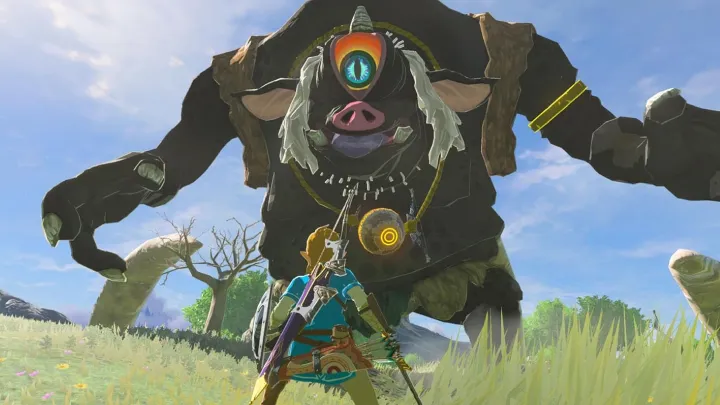
The Legend of Zelda: Breath of the Wild fundamentally re-engineered the open-world genre by replacing traditional linear gating with a sandbox driven by emergent systems. While much critical acclaim has focused on the game's chemistry engine and absolute freedom of movement, players initially ran into a highly polarizing mechanical bottleneck: the weapon durability system. Unlike traditional role-playing games where weapons are permanent companions or upgraded investments, Hyrule’s armory is inherently fragile. Every sword, shield, and bow possesses a hidden, finite lifespan that degrades rapidly with use, shattering into sparkling blue energy fragments upon expiration.
Far from being a superficial nuisance, this resource degradation loop acts as the primary governor of the game's tactical pacing and progression model. This article explores how Breath of the Wild uses weapon degradation to build an active, cyclical economy of survival. By analyzing the system's impact across a player's journey—from the panic of the Great Plateau to the high-level combat loops of the late game—we will deconstruct how this controversial mechanic forces environmental interaction, prevents tactical stagnation, and turns the act of weapon loss into the game's purest expression of emergent strategy.
1. The Genesis of Fragility: How Weapon Degradation Defines the Great Plateau
The opening hours of Breath of the Wild on the isolated Great Plateau serve as a structural trial for the player’s relationship with their inventory. Stripped of master-crafted gear, Link must rely on wooden tree branches, rusted broadswords, and fragile Bokoblin clubs. The immediate strategic realization is that weapons are no longer permanent stats; they are consumable ammunition. This subverts decades of player conditioning, where finding a better weapon meant permanently increasing your baseline damage output.
During this early-game phase, the degradation engine creates a perpetual state of tactical tension. Engaging a basic camp of Bokoblins cannot be approached with mindless button-mashing, as the physical cost of fighting often exceeds the value of the rewards. Breaking three weapons to secure a single chest containing a slightly weaker club forces the player to evaluate the world through an economic lens. This baseline friction breaks the traditional power-fantasy structure, instantly cementing survival as a function of environmental resource management.
2. Decoupling from the Hoarding Mentality: The Psychological Shift in Combat Economics
As players exit the Plateau and venture into the broader expanse of Hyrule, they encounter the psychological hurdle of item conservation. In typical open-world titles, players naturally fall into a "hoarding mentality," storing high-tier weapons for hypothetical future boss fights that they never actually use. Breath of the Wild actively attacks this behavioral loop by drastically restricting initial inventory space through the Korok Seed upgrade matrix.
By keeping inventory slots scarce and weapon lifetimes short, the game forces a continuous cycle of asset liquidation. You are psychologically liberated from hoarding because keeping a pristine Royal Broadsword locked away in your inventory directly hinders your ability to harvest new gear. Weapons become a fluid river of temporary tools rather than a static trophy case, transforming combat into a fast-paced improvisation exercise where you constantly adapt to whatever tools are currently littering the battlefield.
3. The Mathematics of Destruction: Analyzing Hidden Durability Stats and Critical Shatter Modifiers
Beneath the colorful, painterly aesthetic of Hyrule lies a complex, invisible spreadsheet of mechanical variables that govern structural item wear. Every single weapon is assigned a hidden baseline value known as Durability. Each successful strike on an enemy or solid surface deducts exactly one point from this pool, with specific exceptions for elemental shields or parrying techniques.
The Mechanics of Weapon Failure:
- The "Badly Damaged" Alert: Triggered when an item's remaining durability drops to 20% or lower, causing the inventory icon to flash flashing red.
- The Critical Shatter: The final hit of an item always deals exactly double ($2\times$) its baseline damage value, introducing a strategic incentive to intentionally throw a breaking weapon at an enemy's head.
- Sneakstrike Exemption: Executing a successful stealth strike deals massive structural damage to the enemy ($8\times$) while applying only a single durability point deduction to the active blade, maximizing resource efficiency.
4. Environmental Synergies: Weapon Attrition as a Catalyst for Chemistry Manipulation
The true genius of the durability engine is how it forces players to engage with the game's underlying physics and chemistry engines. When a player realizes their active melee inventory is running dangerously low on durability points, they are incentivized to stop fighting with steel and start fighting with the environment. The threat of resource exhaustion turns the sandbox into a weapon.
Instead of sprinting into an enemy encampment with blades drawn, an inventory-starved player looks upward for magnetic metal boulders, scans the terrain for heavy rolling logs, or shoots a flaming arrow at an explosive red oil barrel. By utilizing the Magnesis, Stasis, and Remote Bomb runes, players can clear entire tactical zones without burning a single point of weapon durability. The fragility of physical steel directly engineers the creativity of the player's systemic problem-solving.
5. Mid-Game Scaling and Modifier Progression: Navigating the Weapon XP System
As Link clears Shrines and liberates Divine Beasts, the world of Hyrule subtly upgrades itself through a hidden, global experience system. This scaling engine does not elevate Link’s baseline stats; instead, it raises the tier of enemies and injects advanced modifiers into the weapon spawn pools. Blue Bokoblins give way to Silver Lynels, and rusty blades are replaced by Royal and Ancient variants outfitted with yellow and blue attributes.
These modifiers—such as Durability Up +, Attack Up +, and Long Throw—introduce an interesting layer of nuance to mid-game asset management. A Royal Claymore with a durability modifier changes how a player paces their engagement with elite overworld bosses. Players must evaluate whether to burn their extended-lifespan gear on standard camp clearing or save it explicitly for harvesting high-value materials from Talus and Hinox encounters, adding a macro-level management puzzle to exploration.
6. The Elemental Equation: How Weather and Attributes Affect Wear Mechanics
The durability engine does not operate in a vacuum; it interacts directly with Hyrule's dynamic weather systems and elemental attributes. The physical material of your active weapon dictates how it degrades when exposed to the world’s harsh biomes. Wood burns in the volcanic heat of Death Mountain, while iron transforms into a dangerous lightning rod during severe electrical storms in the Faron region.
Core Material Interaction Matrix:
- Wooden Gear: Ignites instantly when exposed to fire or extreme heat, draining durability continuously but granting a temporary fire-damage aura to strikes.
- Metallic Gear: Immune to fire degradation but vulnerable to electricity; dropping metal weapons during a storm can create chain-lightning traps for enemies.
- Ancient/Guardian Gear: Possesses lower natural durability values on standard terrain but gains an immense structural lifespan boost when striking Guardian stalkers and scouts.
7. The Master Sword Paradox: Restricting Reusability to Preserve Systemic Balance
The inclusion of the legendary Master Sword presented Nintendo's design team with a massive structural challenge: how do you introduce Link’s signature, unbreakable blade into a video game built entirely around weapon scarcity without completely breaking the resource loop? The solution was an elegant mechanical compromise—the blade does not shatter, but it experiences energy exhaustion.
When the Master Sword is overused, its sacred energy depletes completely, locking it behind an absolute ten-minute real-world cooldown timer. This design choice maintains the mechanical integrity of the wider world. The Master Sword acts as a temporary relief valve for your inventory rather than a permanent replacement for it. It provides reliable, high-tier output during critical encounters inside Hyrule Castle, but its recharge cycle ensures you must still harvest and rotate standard world gear during your broader explorations.
8. Shield Surfing and Bow Degradation: The Structural Wear of Movement and Ranged Combat
The resource degradation loop extends past melee blades to encompass bows and shields, ensuring that every facet of Link's mechanical interaction carries an operational cost. Bow durability is consumed with every arrow fired, forcing players to cycle between high-draw sniper bows and quick-fire multi-shot variants. Shields, meanwhile, lose durability based on the raw damage value of the incoming attack they absorb.
The degradation engine becomes deeply tied to player movement through the introduction of Shield Surfing. Locking a shield beneath Link’s feet to slide down grassy hills or snowy mountain peaks applies a continuous, rapid drain to the shield's structural health. Surfing over rough terrain like rock or sand accelerates this decay exponentially, forcing players to consciously trade a high-value defensive asset for immediate horizontal mobility, turning traversal itself into an economic calculation.
9. Late-Game Abundance and the Lynel Economy: Breaking the Scarcity Loop
In the absolute endgame phase of Breath of the Wild, the narrative of desperate survival undergoes a fascinating transformation. Armed with maximized inventory slots and a deep understanding of combat mechanics, high-level players begin to farm the most terrifying monsters on the map: Silver and Gold Lynels. These encounters require immense resource investments, often shattering multiple high-tier shields and weapons in a single engagement.
However, defeating these apex predators yields Savage Lynel gear—the most mathematically potent items in the entire game. This creates a self-sustaining endgame loop known as the Lynel Economy. The player no longer scavenges for rusty scraps; instead, they intentionally break top-tier weapons against a Lynel to harvest even stronger multi-shot bows and high-attack blades. The degradation system scales seamlessly from a tool of early-game survival into the primary driver of late-game skill-based combat loops.
10. Systemic Catharsis: How the Trial of the Sword Mastered the Degradation Formula
The ultimate distillation of Breath of the Wild’s resource degradation engine is found in the Trial of the Sword DLC expansion. This challenge strips Link of all his accumulated gear, hearts, and stamina upgrades, dropping him completely naked into a progression of isolated combat chambers. To survive, the player must maximize the utility of every single stick, rusty axe, and elemental arrow provided by the environment.
The Trial of the Sword functions as a mechanical exam of your systemic survival skills. Overusing a metal crate or failing to cook wood scraps into edible food chips can ruin an entire run. When a player successfully conquers the final floor, they achieve complete systemic catharsis. They have mastered the fluid economics of decay, proving that true power in Hyrule does not come from the durability of the steel in your hands, but from the adaptable mind of the hero wielding it.
Conclusion
The weapon durability system in The Legend of Zelda: Breath of the Wild is the structural spine that holds its sprawling open world together. By tracking the mechanical lifecycle of Hyrule’s armory—from the desperate improvisation of the Great Plateau to the hyper-efficient farming loops of the late game—we see that weapon decay is not an artificial annoyance, but a brilliant engine of player agency. It systematically dismantles player complacency, outlaws a singular dominant strategy, and elevates the value of environmental exploration. In a world defined by the slow decay of a fallen kingdom, the fragile nature of your weapons serves as a beautiful, continuous reminder that survival requires constant adaptation, creativity, and the willingness to let go of the old to embrace the new.