.webp)

Nuclear Throne is often praised as one of the purest rogue-like shooters ever created. With fast movement, tight gunplay, and relentless enemy pressure, it has built a reputation for being unforgiving yet deeply fair. But beneath the bullets, mutations, and chaos lies one issue that shapes every run: the tension between player skill and RNG synergy. Nuclear Throne’s most controversial design choice is how randomness determines weapon drops, mutation availability, enemy positioning, and environmental hazards. Understanding this dynamic is the key to mastering the game. This article explores the deep psychological and mechanical impact of the game’s RNG-driven difficulty curve, examining how randomness shapes strategy, player growth, and long-term mastery.
1. RNG as the Core Identity of Nuclear Throne
At its heart, Nuclear Throne is built around unpredictability. No two runs feel the same, and that unpredictability is not a side effect—it is the identity of the game. From the first Scrapyard rats to the final confrontation with the Throne itself, players must adjust constantly. Every weapon chest, mutation choice, and enemy spawn layout forces quick decision-making.
But while players often blame failures on bad RNG, the design intentionally uses randomness to expose weaknesses in player skill. When the game gives you a suboptimal weapon or forces you into a tight corridor filled with explosive barrels, it tests adaptability, not luck. Veterans of the game do not rely on perfect RNG; they rely on navigating chaos efficiently.
Fair randomness versus punishing randomness
Nuclear Throne walks a thin line: chaos that feels fair keeps players engaged, but chaos that feels unfair defines its difficulty.
2. The Early Game RNG Gap
The early game is where RNG matters most. Starting weapon options and early mutations determine how smoothly a run begins. A crossbow drop in Desert can feel like a blessing, while receiving only slow, ammo-hungry weapons can turn simple encounters into near-death situations.
Experienced players develop strategies to minimize the impact of bad early RNG. They use enemies as weapons, position themselves strategically to funnel crowds, and maximize bullet economy. Still, the early game remains volatile. One poorly timed Scorpion shot or a misjudged explosion can end the run instantly. This unpredictability filters inexperienced players out long before they reach later levels.
The early game punishment window
The game teaches brutality immediately. If players cannot survive bad openings, they cannot survive later chaos.
3. Mutation Synergy: The Hidden Skill Ceiling
Mutation selection is the deepest layer of Nuclear Throne’s RNG-dependence. The mutation pool is wide, and the right combination can transform a run. Scarier Face, Rhino Skin, Thrown Butt, or Recycle Gland can make or break weapon viability. However, mutations also require synergy with weapons, enemy density, and player style.
Skilled players don’t wait for the perfect mutations—they adapt to what they get. They understand when to prioritize survivability mutations like Rhino Skin, when to go offensive with Laser Brain, or when to hedge bets with Extra Feet. Mutation sequencing becomes an art form: choosing Long Arms early to prepare for a melee setup later, or taking Trigger Fingers because a fast, precision weapon is likely to appear in later chests.
Mutation synergy is not luck; it is prediction.
4. Weapon RNG and the Fragility of Power Curves
Weapons define the power curve of a run. A good drop like the Laser Rifle or Assault Slugger can carry a run for several levels. A poor drop can leave players underpowered and forced into risky close-quarters combat. Weapon scarcity, ammo shortages, and the random nature of chests create constant tension.
Yet the weapon ecosystem is balanced around player knowledge. A bad gun is not unusable—it simply demands a different playstyle. Slow reload weapons force disciplined shots. Weak guns require creative positioning. Some weapons, once considered “bad,” become staples in speedrunning strategies because players have learned to exploit them effectively.
The difference between veterans and beginners
Veterans bend weapons to their will. Beginners wait for better ones—and the Throne never waits.
5. The Mid-Game Chaos Spike
Once players reach Scrapyard or Frozen City, RNG begins shaping runs even more aggressively. These zones introduce enemies that are fast, explosive, or numerous. Weapon drops matter more because enemies are tuned high enough to punish low-damage setups. The RNG difficulty spike here is intentional, forcing players to make sharper decisions about positioning, mobility, and spacing.
At this stage, psychological pressure increases. Each new level is a gamble—new weapon? Deadly spawn? Awkward geometry? The mid-game punishes panic, rewarding calm and measured aggression. It is where inexperienced players break and where skilled players shine.
6. Level Geometry and Environmental RNG
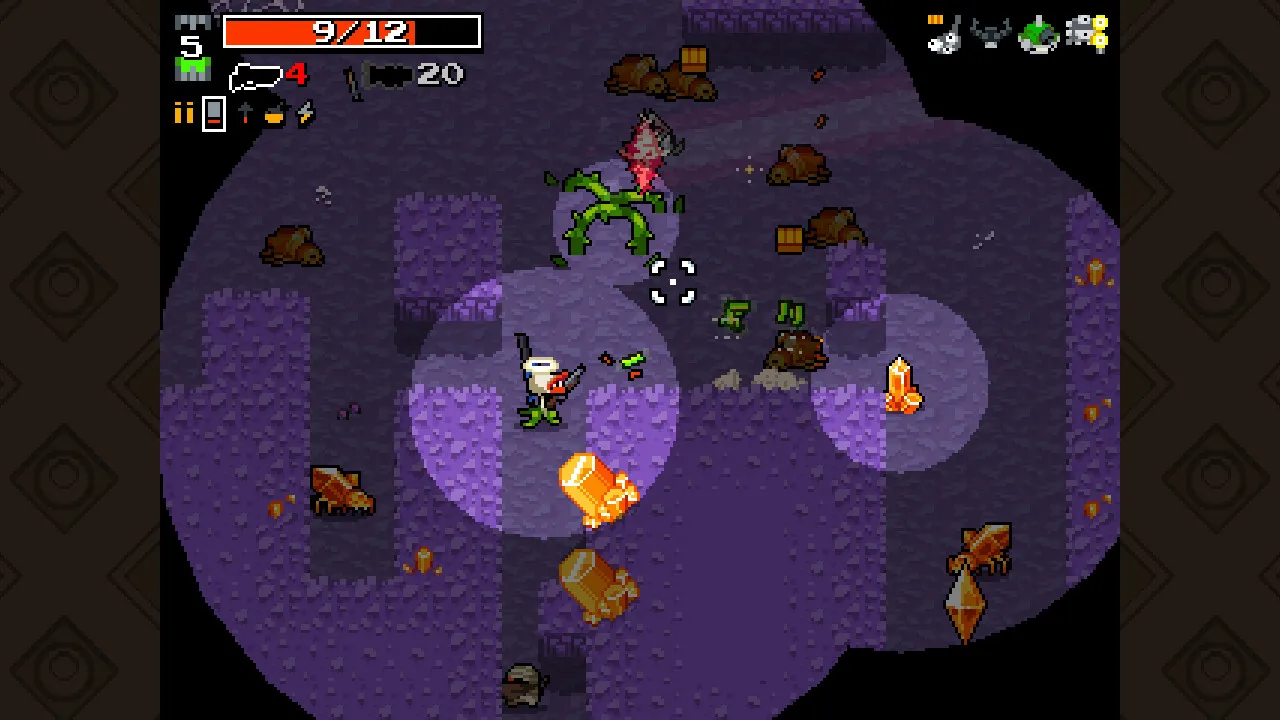
The layout of each level is one of the most overlooked forms of RNG in Nuclear Throne. Narrow corridors, long tunnels, open arenas, or cluttered environments all change how battles unfold. Some weapons excel in tight spaces; others are useless. Some levels spawn enemies behind the player immediately, forcing instant reaction.
This environmental unpredictability tests spatial awareness. Skilled players read geometry instantly, adjusting movement plans in milliseconds. They learn to predict where enemies will spawn based on layout patterns, even though those patterns are randomized. This interplay between geometry and combat is one of the most elegant systems in the game.
Geometry as silent adversary
Sometimes the level layout is the deadliest enemy on the screen.
7. Enemy RNG and the Concept of Unfair Threat Density
In later levels, threat density becomes extreme. Multiple high-damage enemies can appear in the same room, creating situations that feel impossibly unfair. Yet these spikes are part of the design. Nuclear Throne wants players to learn what veterans call “threat triage”—the ability to instantly determine which enemy must die first.
The presence of even one IDPD spawn can flip a calm run into a disaster. Laser Miniguns, double Shielders, or random Bandits behind a wall can trap players in unavoidable crossfire. But each enemy type behaves consistently. Mastery comes from predicting not what the game will spawn, but how each enemy will act once it appears.
8. The Throne and the Illusion of Unfairness
The Nuclear Throne fight is a culmination of everything the player has learned—adaptability, precision, resource management, and movement. But RNG still plays heavily into the battle. Ammo drops, laser patterns, IDPD spawns, and player positioning vary with each attempt. The fight demands perfection, but the conditions of the fight are never identical.
Many players describe the Throne fight as unfair, but it is merely unrelenting. The boss punishes greed, impatience, and sloppy positioning. It rewards discipline, tight dodging, and mastery of weapon rhythm. The Throne exposes every flaw a player still has. The randomness does not make the fight impossible—it makes it dynamic.
The final lesson
Chaos is the teacher. The Throne is the exam.
9. Psychological Adaptation: Embracing the Chaos
One of the deepest challenges in Nuclear Throne is not mechanical—it is psychological. Players must learn to accept randomness instead of fighting it. Some runs will feel doomed from the start. Others will feel blessed. But the truth is that every run is winnable in the hands of someone who understands the system.
Players who thrive in this game treat bad RNG as training. They analyze failures, adjust strategies, and approach each run with a flexible mindset. Nuclear Throne trains mental resilience, forcing players to stay calm under extreme pressure and adapt instantly.
The mental game
Mastery begins the moment a player stops blaming RNG and starts learning from it.
10. Mastery and the Evolution of Skill Through RNG
The beauty of Nuclear Throne is that it teaches players how to navigate chaos—not control it, but coexist with it. The game does not reward perfection; it rewards adaptability. Over time, players develop a sixth sense for danger, weapon rhythm, mutation scaling, and level flow. RNG becomes less intimidating and more like a rhythm they can dance with.
The final stage of mastery occurs when players no longer depend on good RNG. They create their own power through fundamentals—movement, ammo management, prediction, and precision. At this level, the game transforms. What once felt like unfair randomness now feels like a playground for expression and skill.
The tension between randomness and player agency is the beating heart of Nuclear Throne. Every weapon drop, mutation choice, level layout, and enemy spawn creates a dynamic, unpredictable experience that forces players to adapt constantly. Nuclear Throne is not unfair—it is uncompromising. It teaches mastery through chaos, discipline through randomness, and confidence through failure. This blend of unpredictability and skill expression is what makes it one of the most timeless rogue-like shooters ever made.